
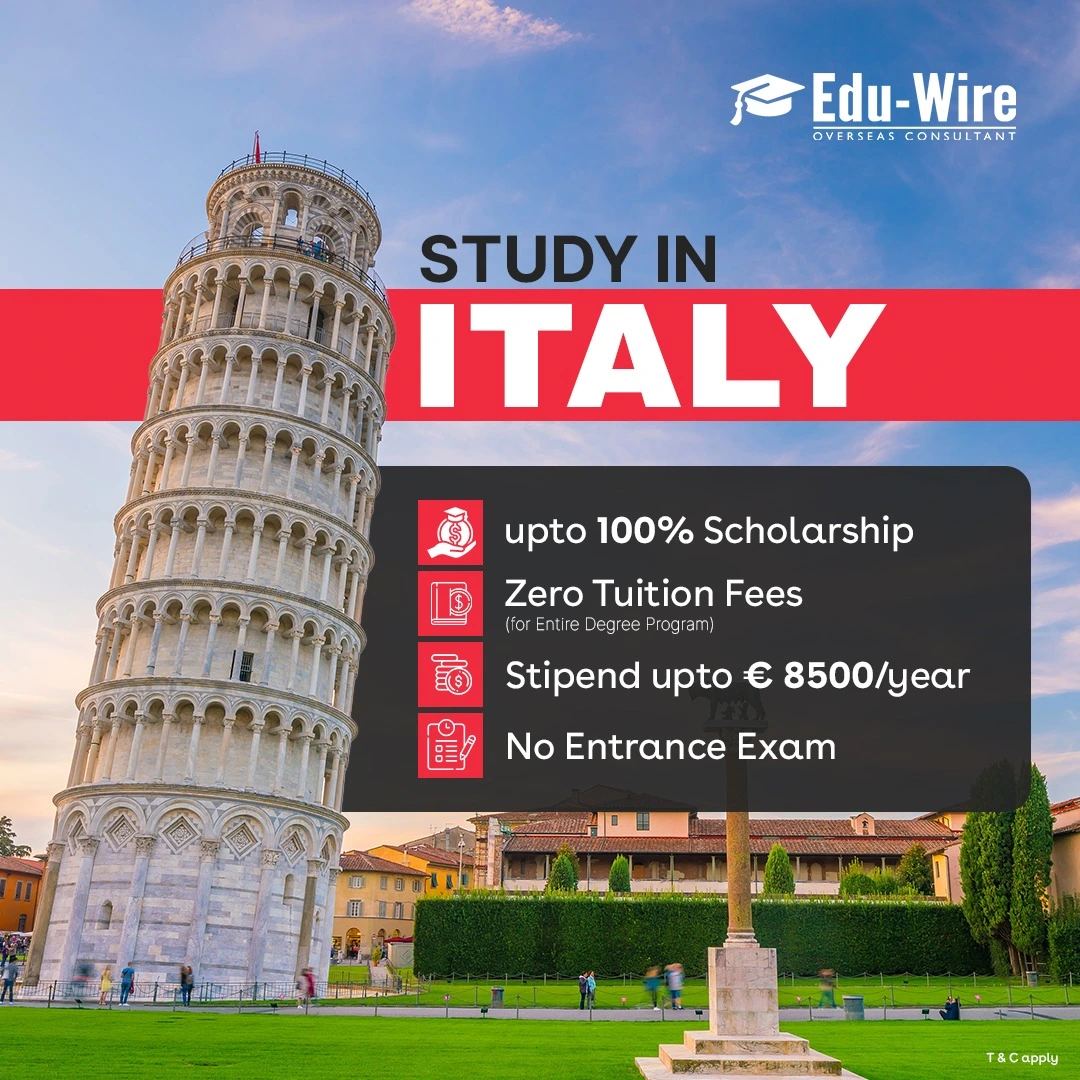
Why Financial Planning Matters
When moving abroad for higher studies, the excitement of a new academic journey often comes with the challenge of financial responsibility. While Italy’s tuition fees are generally lower than those in countries like the UK or the US, expenses such as accommodation, meals, and daily living still add up. This is why financial planning and awareness of available funding options are crucial.
Scholarships and grants not only reduce your costs but also ease your mental burden, allowing you to focus more on academics and personal growth. Some of these scholarships cover full tuition fees, others include monthly living allowances, accommodation, or even medical insurance — making Italy one of the most financially accessible destinations for higher education.
Major Scholarship Schemes for 2025–26
1. Italian Government (MAECI) Scholarships
The Italian Ministry of Foreign Affairs and International Cooperation (MAECI) offers annual scholarships to support international students and Italian citizens living abroad. These scholarships are available for master’s degrees, PhD programs, and certain research projects in Italian universities.
They usually include a full or partial tuition fee waiver, a monthly allowance of around €900 to help with living costs, and comprehensive health insurance. In some cases, they also provide support for Italian language study or specific research activities. Applications are made online through the Study in Italy portal, and selection is highly competitive, focusing on both academic merit and motivation. For students who qualify, MAECI scholarships can remove nearly all financial pressure during their studies.
2. Erasmus Mundus Joint Master’s (EMJM)
The Erasmus Mundus program, funded by the European Union, is another prestigious opportunity for students who wish to study in Italy while also experiencing education across different European universities. Under this scheme, students enroll themselves in joint master’s programs designed and taught by a consortium of universities across Europe, often including at least one Italian institution.
The financial support offered under Erasmus Mundus is extensive. It typically includes full tuition fee coverage, a monthly stipend ranging from €1,000 to €1,400, and additional contributions toward travel, visa, and installation costs. The program not only funds your studies but also gives you a chance to live and learn in different European countries, adding global exposure to your degree. Erasmus graduates benefit from a strong international network and wide career recognition across Europe and beyond.
3. DSU Regional Scholarships (Diritto allo Studio Universitario)
Every region in Italy operates its own DSU (Right to Study) scholarship scheme to support students with financial needs. These scholarships are particularly popular among international students because they provide direct and practical assistance with day-to-day expenses.
The DSU scholarship can include a complete or partial exemption from tuition fees, free or subsidised university accommodation, and meal vouchers for student canteens. In addition, recipients often receive an annual allowance to help with personal expenses. Each region — such as Tuscany, Lombardy, or Lazio — manages its own DSU applications separately, and eligibility is determined through income documents provided by the applicant. This scholarship is especially valuable for students from modest-income families, as it covers basic living needs while allowing them to focus fully on their studies.
4. University-Specific Scholarships
Almost every major Italian university offers its own scholarship programs for outstanding or financially needy students. These may come in the form of full or partial tuition fee waivers, one-time financial grants, or even recurring stipends.
For instance, the University of Bologna offers the International Talents @Unibo Scholarship, which provides €6,500 and a full tuition waiver to top-performing international students. Similarly, Politecnico di Milano runs merit-based scholarships that grant tuition waivers and additional support to high-ranking students, while the University of Milan awards its Excellence Scholarships, which provide up to €6,000 per year alongside reduced tuition.
Each university has its own eligibility requirements and deadlines, so students should check the official scholarship pages of their chosen institutions. Most of these awards are competitive and based on academic performance and consistent progress during the program.
5. Bilateral, Foundation, and Private Scholarships
Apart from the major government and university schemes, there are also several foundation-based, private, and bilateral scholarships available to international students. These are often offered through cultural institutions, international NGOs, or agreements between Italy and other countries.
While these scholarships may not always cover the full cost of tuition or living, they can be incredibly useful in covering travel expenses, purchasing books, or paying for short-term academic projects. For instance, some bank foundations or cultural organisations fund small grants for students studying in specific fields or regions of Italy. These opportunities can easily be combined with DSU or university scholarships to fill any remaining financial gaps.
What Scholarships Usually Cover
Most scholarships in Italy are structured to reduce both academic and personal expenses. Depending on the program, they can cover tuition fees, accommodation, meals, and even medical insurance.
Government scholarships like MAECI often include full tuition waivers and a monthly stipend. Erasmus Mundus provides similar financial security with additional travel and installation allowances. DSU scholarships directly support daily living by providing free or discounted housing and meal vouchers. Some university scholarships also include insurance and administrative fee reductions.
Travel costs are generally covered under Erasmus Mundus or bilateral programs, though MAECI may offer partial support. Overall, these scholarships ensure that studying in Italy remains within reach, even for students from lower-income backgrounds.
Understanding Living Costs in Italy
Even with scholarship support, it’s helpful to have an idea of the typical expenses you might face. The cost of living varies by city. Students in larger cities such as Milan or Rome might spend between €1,000 and €1,200 per month, including rent, food, and transport. In medium-sized cities like Bologna or Florence, monthly expenses average between €850 and €1,000, while smaller towns such as Pisa or Siena are considerably more affordable, averaging around €700 to €900 per month.
With DSU support or university-provided housing, many students find that their total monthly costs drop significantly, often leaving them with enough funds from their scholarship stipend to cover personal needs comfortably.
Tips for Applying to Scholarships in Italy
- Start early. Most scholarships open between February and May for the following academic year.
- Check eligibility requirements. Each scholarship has unique rules related to nationality, academic level, and field of study.
- Apply to multiple scholarships simultaneously. You can often combine DSU support with university merit awards for better coverage.
- Prepare financial documents carefully. For need-based aid, official income certificates or tax documents are required, often translated into Italian or English.
- Maintain good academic standing. Merit-based scholarships depend on consistent grades and progress during your studies.
Starting early and preparing the required documents ahead of time ensures you won’t miss out due to tight deadlines.
Creating a Smart Funding Strategy
The best way to make your education in Italy affordable is to combine scholarships strategically. Begin by applying for MAECI or Erasmus Mundus as your primary funding source. Once you’ve secured admission to a university, apply for the DSU scholarship in your region to cover accommodation and meals. You can also apply for university merit awards or smaller private grants to handle additional costs like travel or materials.
By combining these opportunities, many international students successfully study in Italy with minimal personal expenses, often enjoying a fully funded academic experience.
Final Thoughts
Italy stands out not only for its academic excellence and cultural richness but also for its strong commitment to making education accessible to students from every background. Whether you’re studying engineering in Milan, literature in Florence, or international relations in Rome, there’s a scholarship designed to help you achieve your goals.
Financial barriers should never stop you from pursuing your academic dreams. With careful research, timely applications, and a balanced funding plan, Italy offers an opportunity to study in a country where history, innovation, and affordability come together to create a truly remarkable learning experience.

.gif)


