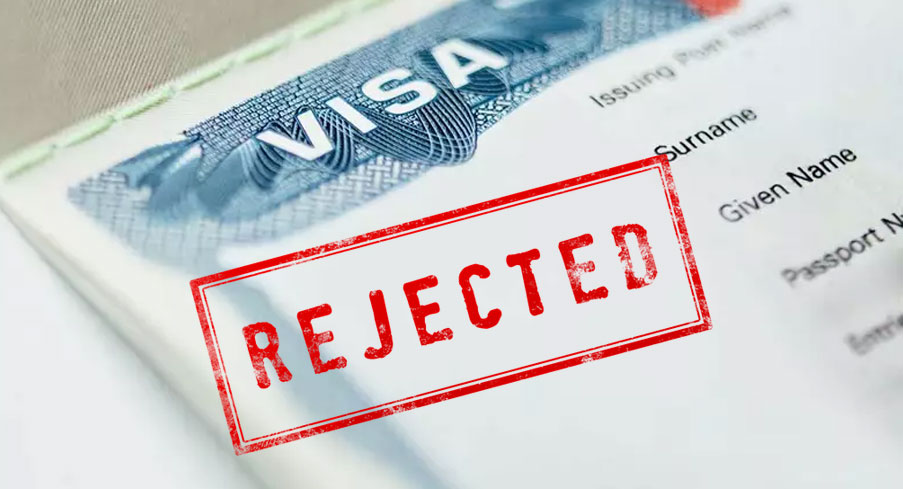
What to Do If Your Study Visa Gets Refused – And How to Avoid It
A study visa refusal can be heartbreaking for students and parents alike. After months of planning, preparing documents, and dreaming of an international education, a rejection can feel like the end of the road.
However, the truth is that most student visa refusals are avoidable if every step of the application is handled carefully and professionally.
When a student applies for a study visa, both the student and parents must be fully aware and prepared about every aspect of the profile. Even a single weak area can result in refusal.
1. Academic Profile Matters the Most
Your academic performance plays a crucial role in your study visa application. Visa officers carefully examine your marks, percentage, GPA, and academic consistency.
- Strong marks and a good GPA show your ability to handle international education
- Low scores, failures, or weak academic history can raise doubts
- Always mention correct and verifiable academic scores
Advice: Your academic hard work today opens doors to international destinations tomorrow.
2. IELTS / English Proficiency – A Key Decision Factor
English proficiency is non-negotiable for a study visa. Exams like IELTS, TOEFL, or PTE prove that you can communicate and understand academic content in a foreign environment.
- An IELTS score of 7+ or 8+ makes you a strong and competitive applicant
- Low scores or repeated attempts without improvement can harm your visa chances
Tip: Prepare for IELTS with expert guidance, regular practice, and a focused strategy to reflect seriousness and readiness.
3. Course Relevance & Academic Consistency
Mismatch between past academics and the chosen course is one of the most common reasons for visa refusal.
- Your chosen course must align logically with your previous education
- Sudden or unexplained course changes raise red flags
- You must show a clear academic and career path
Visa officers look for clear academic progression, not confusion.
4. Study Gaps Must Be Properly Justified
Study gaps are acceptable only if they are supported with valid reasons and proper documentation.
- Health emergencies
- COVID-19 or pandemic-related delays
- Relevant work experience
- Skill development or professional training
Unexplained gaps can seriously weaken your visa application. Every gap must be justified with proof and explanation.
5. Strong Financial Documentation Is Mandatory
Financial stability proves that you can support your education and living expenses abroad.
- Savings account balance
- Fixed Deposits (FDs)
- Demat accounts
- Investments and financial holdings
- Sponsor documents (usually parents)
If sufficient funds are not available, an education loan is a strong and acceptable alternative.
6. SOP / Cover Letter – The Heart of Your Visa File
The Statement of Purpose (SOP) or Cover Letter is the most critical document in your visa application.
- Academic background
- Financial strength
- Reason for choosing the course
- Reason for selecting the country and university
- Future career goals
- Clear intention to return to your home country
A weak, copied, or poorly written SOP is one of the top reasons for visa refusal.
7. Health Insurance – Small Detail, Big Impact
Incorrect or incomplete health insurance details can delay or even lead to visa refusal.
- Insurance must meet the country’s visa requirements
- Coverage amount and duration must be accurate
- Incorrect information can negatively affect your application
What to Do If Your Study Visa Gets Refused?
- Do not panic
- Read the refusal letter carefully
- Identify weak areas such as academics, SOP, or finances
- Correct mistakes and strengthen your profile
- Reapply with expert guidance
Most refusals happen due to lack of proper counseling and professional support.
Final Words: Your Success Starts with the Right Guidance
A study visa is not just about submitting documents — it is about presenting a strong, honest, and well-structured profile.
From academics and IELTS to finances, SOP, health insurance, and future goals — every detail matters.
With the right guidance and expert support, your dream of studying abroad can become a reality.
Need Expert Help for a Successful Student Visa?
If you want a successful student visa, don’t leave your future to chance.
Contact us today for:
- Expert counseling
- IELTS preparation
- SOP & cover letter writing
- Financial guidance & education loans
- University and country selection
- Complete student visa assistance
We are here to help you at every step — from application to visa approval.
Your international education dream deserves the right direction and the right support.
We understand that your dream education means everything to you and your family. We don’t just promise — we stay with you.
Our mission is to help every student succeed. Contact us today for a smooth and seamless study abroad journey.


.gif)


